Skip to content
LawrenceHeights Locksmith ServicesOpen 24/7 (289) 236-8131
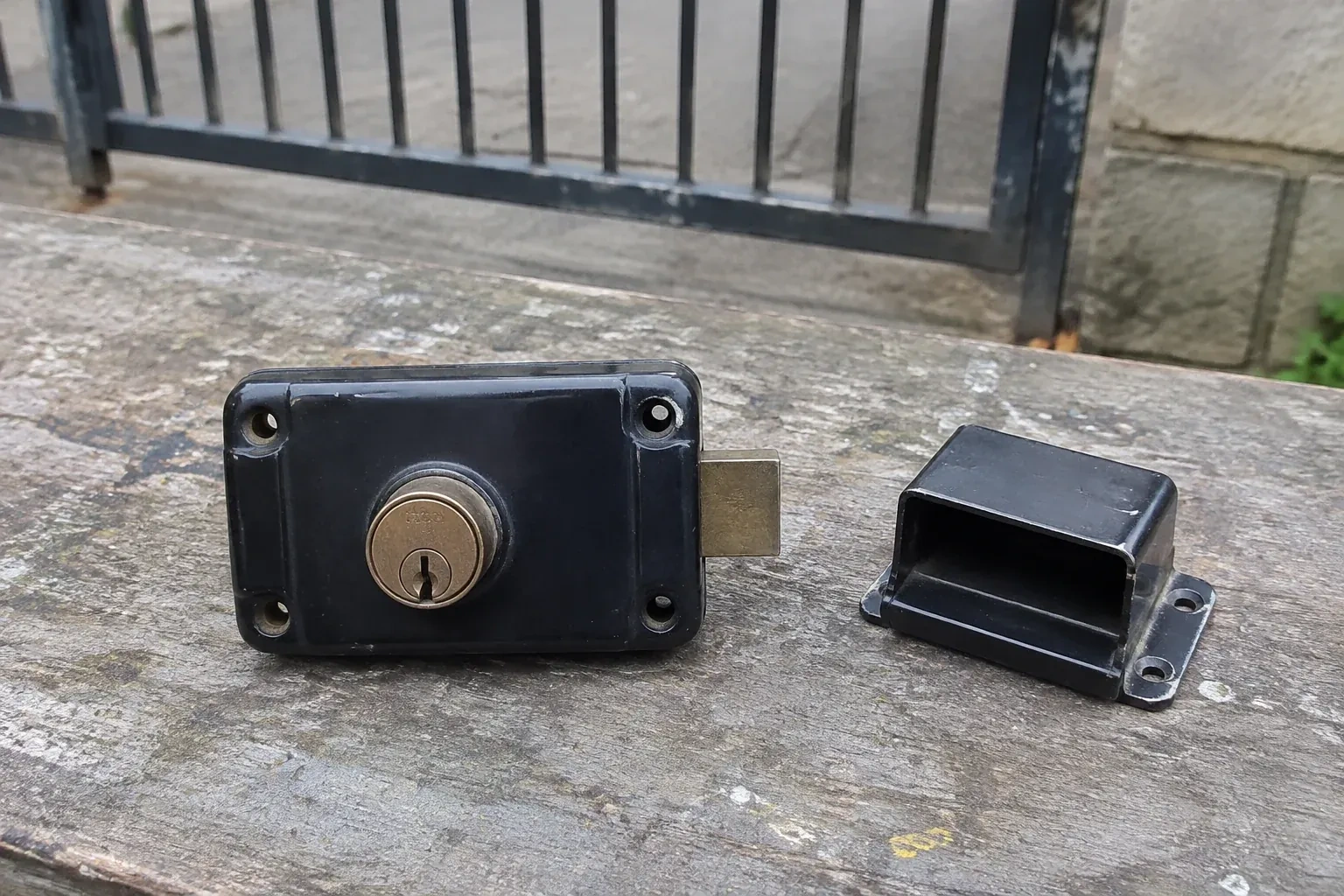
Detached rim gate lock and separate box keeper on an outdoor workbench. — Gate & Building Entry Locks, Toronto

Change or rekey · Toronto

Gate & Building Entry Locks

Between the front gate, the side gate and the one behind the shed, there are three different padlocks, three different keys, and a growing pile of duplicates in a kitchen drawer that nobody can match to the right lock anymore.
In plain words

A gate or door that will not latch is rarely just a lock problem; more often the hardware is being asked to catch a moving target. This visit reads the gate or door's actual swing, sag and alignment first, then brings the closer, hinges, strike and cylinder into agreement with each other rather than replacing parts one at a time. Once the physical fit is right, the same lock that seemed unreliable for months often turns out to have been sound all along.

Sound familiar?Toronto

The call
Between the front gate, the side gate and the one behind the shed, there are three different padlocks, three different keys, and a growing pile of duplicates in a kitchen drawer that nobody can match to the right lock anymore.

NextHow the visit goes

Gate & Building Entry Locks · Toronto

How the visit goes

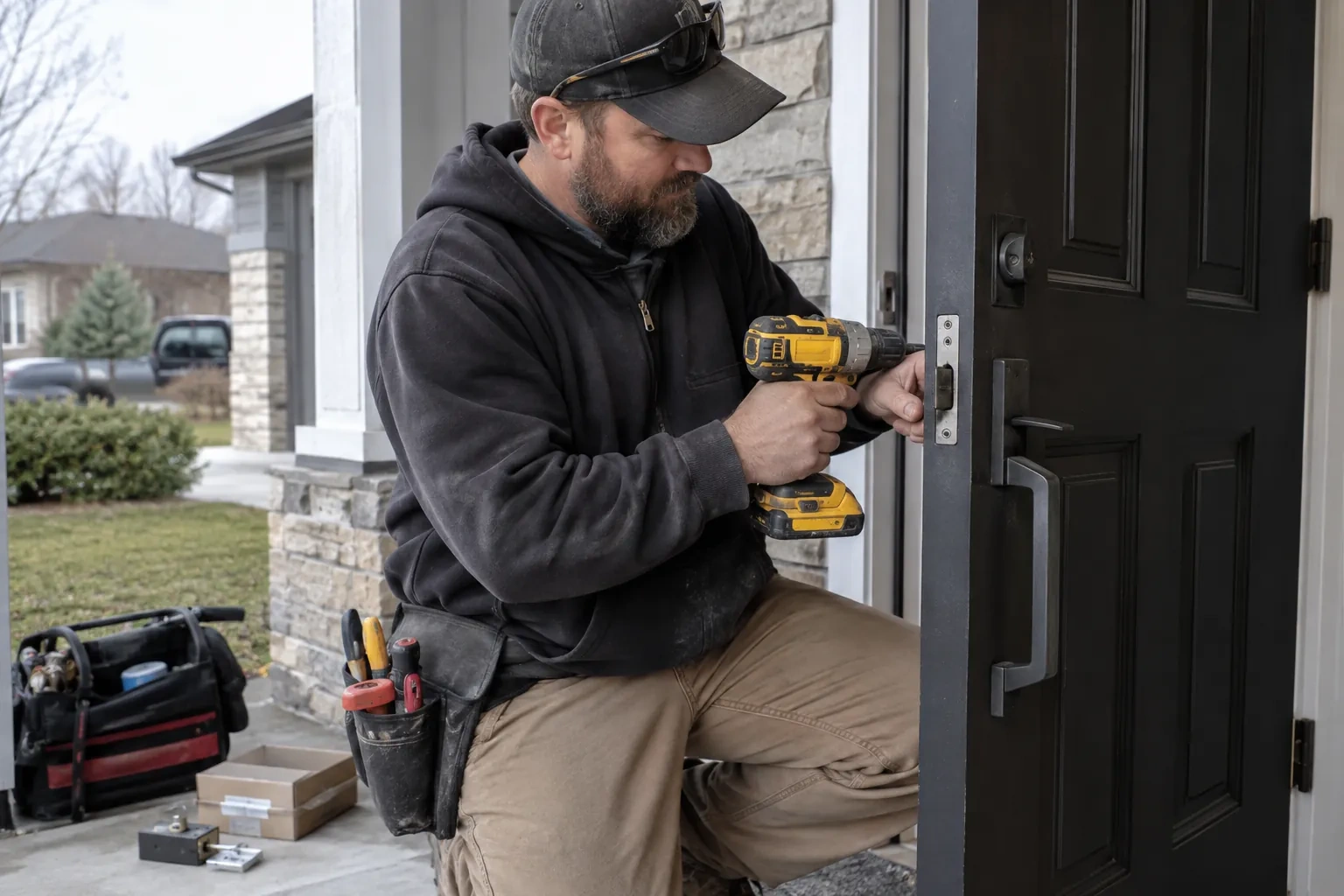
Technician kneeling with a yellow cordless drill at the latch plate of a black door, a tool bag on the porch. — Toronto
  1. Scene 1

    Reading a frost-heaved or settled post

    Ground movement shows up as a lock problem long before anyone thinks to blame the post. The locksmith checks whether the gate post has lifted, tilted or settled relative to the latch post it is supposed to line up with, and by how much, since a small seasonal shift is different from a post that has genuinely moved for good. This distinction decides whether the fix is resetting the strike position for now or addressing the post itself, and it keeps the same misalignment from returning with the next frost.

  2. Scene 2

    Bringing the closer into proper adjustment

    Once the gate or door's swing has been read, the closer is adjusted in stages: overall closing speed, the final push that seats the latch, and how firmly the last few centimetres land. Each change is tested by cycling the gate several times before moving to the next adjustment, rather than guessing at a single setting. Where the arm, fittings or fluid are worn beyond adjusting, the closer is replaced with one sized to the gate's weight and width. The aim is a gate that swings its full arc, slows near the end, and settles into the latch on its own every time.

  3. Scene 3

    A post and frame that hold their position

    Where ground movement had thrown the gate out of line, you leave with a post that has been reset, packed or braced so it stays where it was put, not just a strike that was shimmed to match wherever the post happened to be that day. The gate should now close consistently through the seasons rather than needing a fresh adjustment every time the ground shifts. Check it again after the next hard frost or a wet spring, since soil movement is ongoing rather than a one-time event.

In the van

  • Keyed-alike cylinders
  • Hinges, pivots and shims
  • Corrosion-resistant fasteners
  • Weather-rated cylinders
  • Dry graphite or PTFE lubricant

What shapes the quoteLawrence Heights Locksmith Services

Whether the post or frame needs correction
When the underlying cause is a leaning post or a shifted frame rather than the lock itself, resetting, packing or bracing that structure is quoted as its own item alongside the lock work.
Time of year and weather on the day
A cylinder frozen solid or a closer stiffened by cold takes patient work before adjustment or replacement can even begin, so a call made during a cold snap is quoted with that extra time in mind.
Type and grade of the gate or door lock
A basic surface-mounted gate latch, a weather-rated cylinder, a mortise case and a panic device on a building entry each take different parts and different amounts of time to service, and that difference is reflected in the quote.

FeesSame any hour

Have it ready

Before you call · 0 / 3

(289) 236-8131

Straight answers

Who is allowed to ask for a rekey on a shared building entry?

Because a shared entry serves more than one household, the locksmith looks for someone with authority over the whole door: an owner, a landlord, a property manager or a condo board, rather than any single resident acting alone. An individual tenant can usually request work on their own unit's door without issue, but changing the lock everyone in the building relies on to get in is treated as a decision for whoever manages the property, with current residents given new keys once it is done.

Our property has a lot of separate gates. Is there a way to manage that with fewer keys?

Yes, a master key arrangement is a common answer: individual gates each keep their own key for day-to-day use, while one additional master key opens all of them for whoever manages the whole property, such as an owner or a maintenance contractor. Setting this up means recombining or replacing the cylinders involved so they share a compatible pinning structure, which is planned out before any single gate's lock is touched, so the system works as intended once finished.

I rent my unit. Can I request gate or entry lock service myself?

You can certainly call about a problem you are experiencing, such as a side gate that will not latch or a buzzer that stopped working, and the locksmith will look into it. Where the fix touches the shared entry everyone in the building relies on, rather than something specific to your own unit, the work is usually coordinated with whoever manages the property, since a rekey or replacement there affects every current resident, not just the person who noticed the problem first.

Torontoinformation

TorontoOntario

Town
Toronto
In business
14 years
Hours
Open 24/7
Nights, weekends and holidays, same fees
Visits
On-site assessment preferred. Request a visit or call.

2021 census: what it means at the door

Every square is one home in a hundred.

  • 58 in 100 homes · older homes
  • About 58% of homes in Toronto were built in 1980 or earlier, according to the 2021 Census.Decades of seasons move a frame, and an older house often has a front door that locks easily in summer and fights in winter. Setting the strike with the seasons in mind, and choosing a lubricant that stays fluid in the cold, keeps it working year round.
  • Single-detached houses make up about 23% of homes in Toronto (2021 Census).Where housing is mostly apartments and condos, mailbox locks are a regular call. A worn or lost mailbox key is a small job that a locksmith handles alongside the suite door, and the new lock comes with fresh keys cut on the spot.

Source: Statistics Canada, Census Profile

Open Toronto in Google Maps

On-site assessment

Request a visit.

Between the front gate, the side gate and the one behind the shed, there are three different padlocks, three different keys, and a growing pile of duplicates in a kitchen drawer that nobody can match…

(289) 236-8131, open 24/7.