Skip to content
LawrenceHeights Locksmith ServicesOpen 24/7 (289) 236-8131
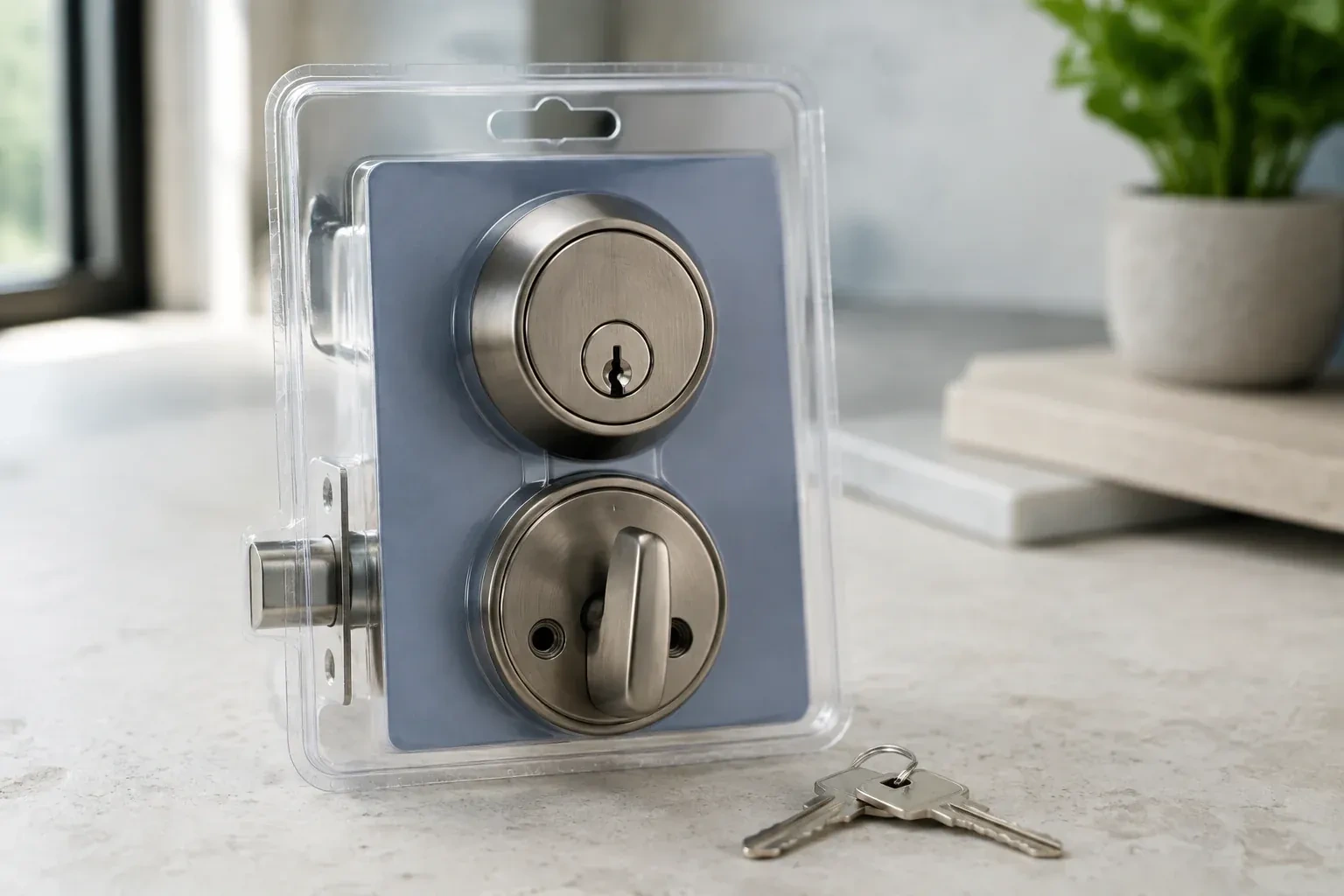
A silver-colored deadbolt set in clear packaging with two keys resting on the countertop in front. — Lock Rekeying, Toronto

Change or rekey · Toronto

Lock Rekeying

One key for the front door, another for the back, a third for the side door into the garage, and a fourth for the shed. You stand on the step every evening flipping through them in the dark, trying each one until something turns.
In plain words

Moving into a home is the moment most people first hear about rekeying, and it is the most sensible time to do it. A resale house has usually passed through owners, real estate agents, home inspectors, cleaners and trades, each of whom may have held a key at some point. Rekeying every exterior cylinder on move-in day means the only keys that work are the ones cut for you, and the same visit is a chance to put every door on one key so the coffee tin of mystery keys can go in the recycling.

Sound familiar?Toronto

The call
One key for the front door, another for the back, a third for the side door into the garage, and a fourth for the shed. You stand on the step every evening flipping through them in the dark, trying each one until something turns.

NextHow the visit goes

Lock Rekeying · Toronto

How the visit goes

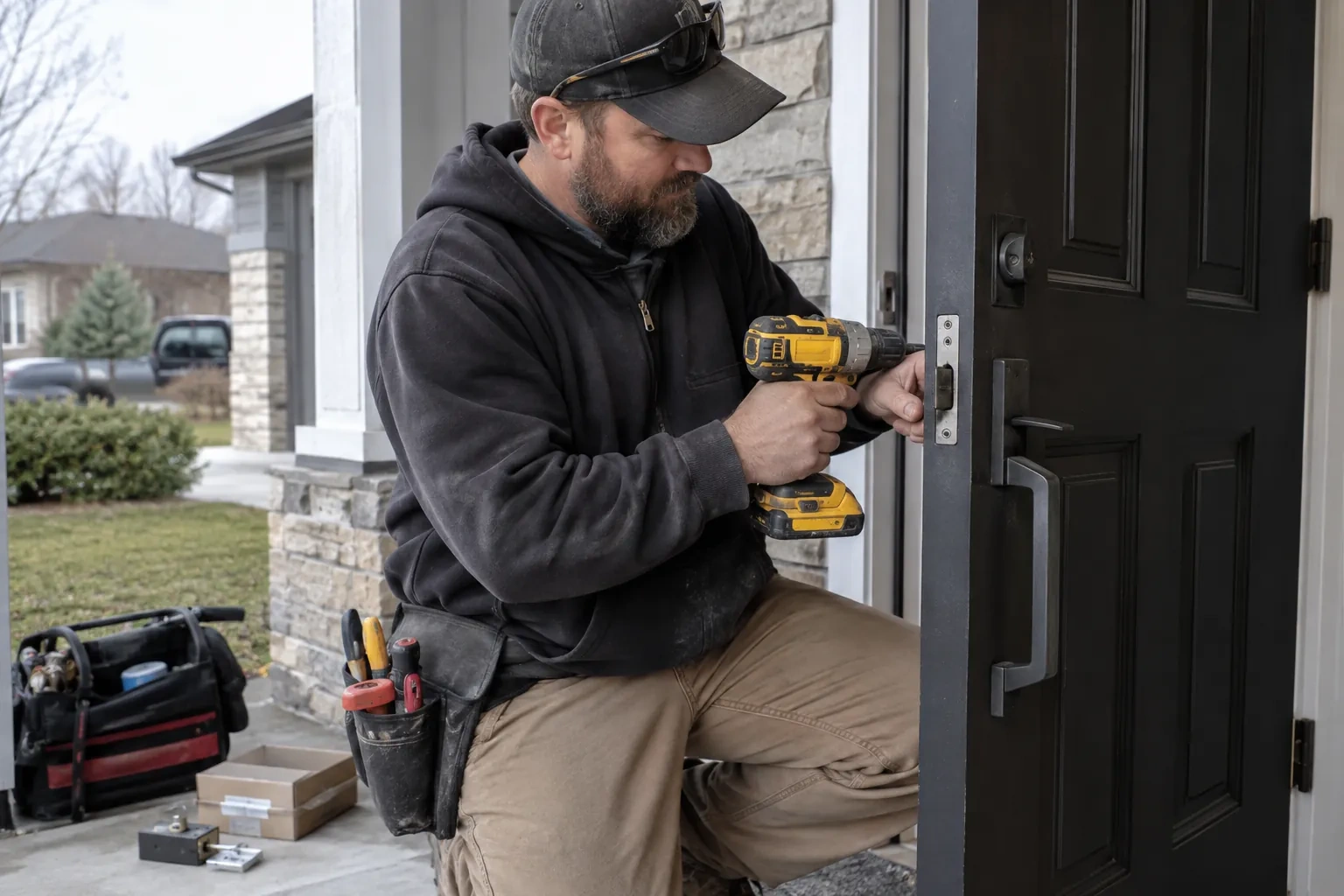
Technician kneeling with a yellow cordless drill at the latch plate of a black door, a tool bag on the porch.
  1. Scene 1

    Counting the keys that are already out there

    Part of planning a rekey is understanding why it is happening. The locksmith asks how many keys exist as far as you know, who has held one, and whether any went missing with something identifying the address. The answers do not change the pinning, but they shape the advice: whether a padlock or mailbox shares the same risk, whether a garage keypad code should change on the same visit, and how many new keys make sense to cut. It also helps to know whether any key is a restricted or patented type, since those are cut from a record rather than duplicated and may involve the original supplier.

  2. Scene 2

    Reassembly and the shear-line test

    On a pin-tumbler cylinder, the plug goes back into the housing with the new key in it, pushing the follower out ahead of it, and the cam or tailpiece is refitted with its retainer. Before the cylinder goes anywhere near the door, the locksmith turns the new key and checks that the plug rotates freely with no catch, then removes the key and confirms the plug is locked solid. A pin a fraction too long or too short shows up here as a rough turn and is corrected on the bench. Only a cylinder that passes goes back into its lock, where it is tested again with the door open and then closed.

  3. Scene 3

    Living with one key for the house

    If the visit brought your doors onto a single key, daily life gets a little simpler: one key opens the front door, the back, the garage's side entry and the shed, and the ring in your pocket shrinks to the car key and one for the house. Anyone you give a key to gets the same freedom, which is convenient for family and worth thinking about for anyone who should only reach one door; that is what a separate group is for. Keypads and smart locks keep their codes, and their override cylinder now takes the same key. If you add a door later, its cylinder can be pinned to match.

In the van

  • Code cutter or key duplicator
  • Replacement cylinder for odd keyways
  • Graded bottom pin kit
  • Retaining clip tool
  • Cylinder shim

What shapes the quoteLawrence Heights Locksmith Services

Type of lock on each door
A standard deadbolt, a knob or lever set, a mortise lock in an older door, a padlock and a smart lock's override cylinder each come apart differently and take different time on the bench.
Mailboxes, padlocks and cabinets
Small cam locks on mailboxes and cabinets are usually replaced rather than repinned, and padlocks vary in whether they can join the house key; each of these is priced as its own item.
Condition of the existing cylinders
A clean cylinder is repinned as it is. One with collapsed springs, a plug packed with old oil or a worn housing needs service or replacement while it is apart, and that shows separately.

FeesSame any hour

Have it ready

Before you call · 0 / 3

(289) 236-8131

Straight answers

One of my locks is stiff and worn. Can it still be rekeyed?

Often the stiffness is grit, old oil and tired springs rather than real wear, and those are handled while the cylinder is on the bench: the plug is cleaned, new springs go in with the new pins, and a dry lubricant finishes it. If the plug has worn oval or the housing is damaged, the locksmith shows you and suggests a replacement cylinder pinned to the same key, rather than fresh pins in a lock that will keep dragging.

Should I rekey when I move into a new home?

It is the single most common reason to rekey, and a sensible one. A resale home has typically passed through owners, agents, inspectors, cleaners and trades, any of whom may have had a key cut. A newly built home has been opened by construction crews using a builder's key. Rekeying on move-in means the only working keys are yours, and the same visit can bring every exterior door onto a single key, retiring the assorted keys you inherited.

I am a landlord. Should I rekey between tenants?

Many landlords do, and it removes the question of whether every copy came back. The locksmith rekeys the unit's cylinders so the incoming tenant holds the only working keys, cuts the copies you want, and notes the count for your move-in record. Because provincial tenancy rules expect the tenant to be handed replacement keys whenever a landlord changes a lock, the visit ends with keys for both of you and a clear list of which doors were done.

Torontoinformation

TorontoOntario

Town
Toronto
In business
14 years
Hours
Open 24/7
Nights, weekends and holidays, same fees
Visits
On-site assessment preferred. Request a visit or call.

2021 census: what it means at the door

Every square is one home in a hundred.

  • 58 in 100 homes · older homes
  • About 58% of homes in Toronto were built in 1980 or earlier, according to the 2021 Census.Decades of seasons move a frame, and an older house often has a front door that locks easily in summer and fights in winter. Setting the strike with the seasons in mind, and choosing a lubricant that stays fluid in the cold, keeps it working year round.
  • Single-detached houses make up about 23% of homes in Toronto (2021 Census).Where housing is mostly apartments and condos, mailbox locks are a regular call. A worn or lost mailbox key is a small job that a locksmith handles alongside the suite door, and the new lock comes with fresh keys cut on the spot.

Source: Statistics Canada, Census Profile

Open Toronto in Google Maps

On-site assessment

Request a visit.

One key for the front door, another for the back, a third for the side door into the garage, and a fourth for the shed.

(289) 236-8131, open 24/7.