Sound familiar?Lawrence Manor
- The call
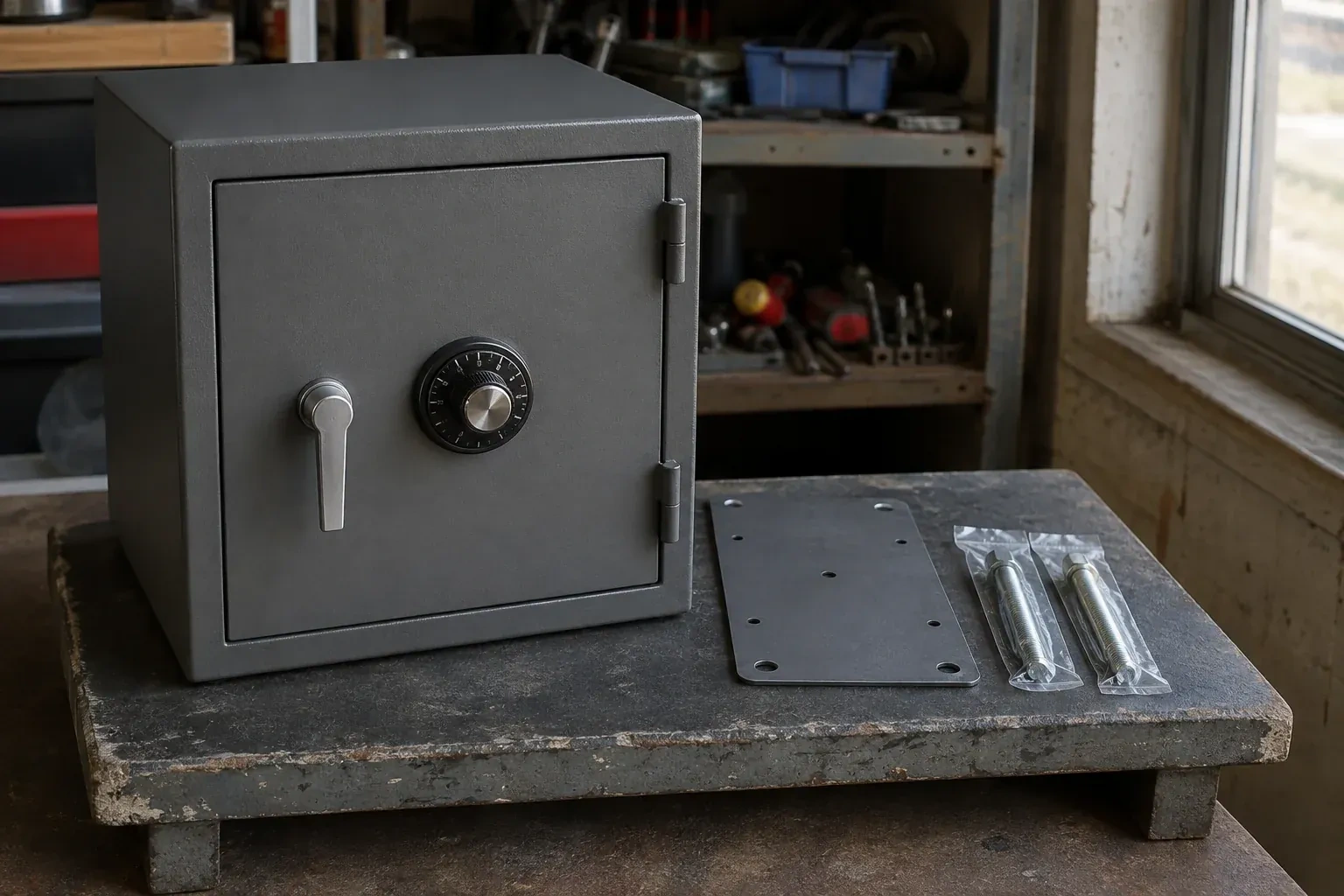
- A customer's rifle safe at the range has a dial that simply will not respond to the combination written on the sales receipt from years ago.
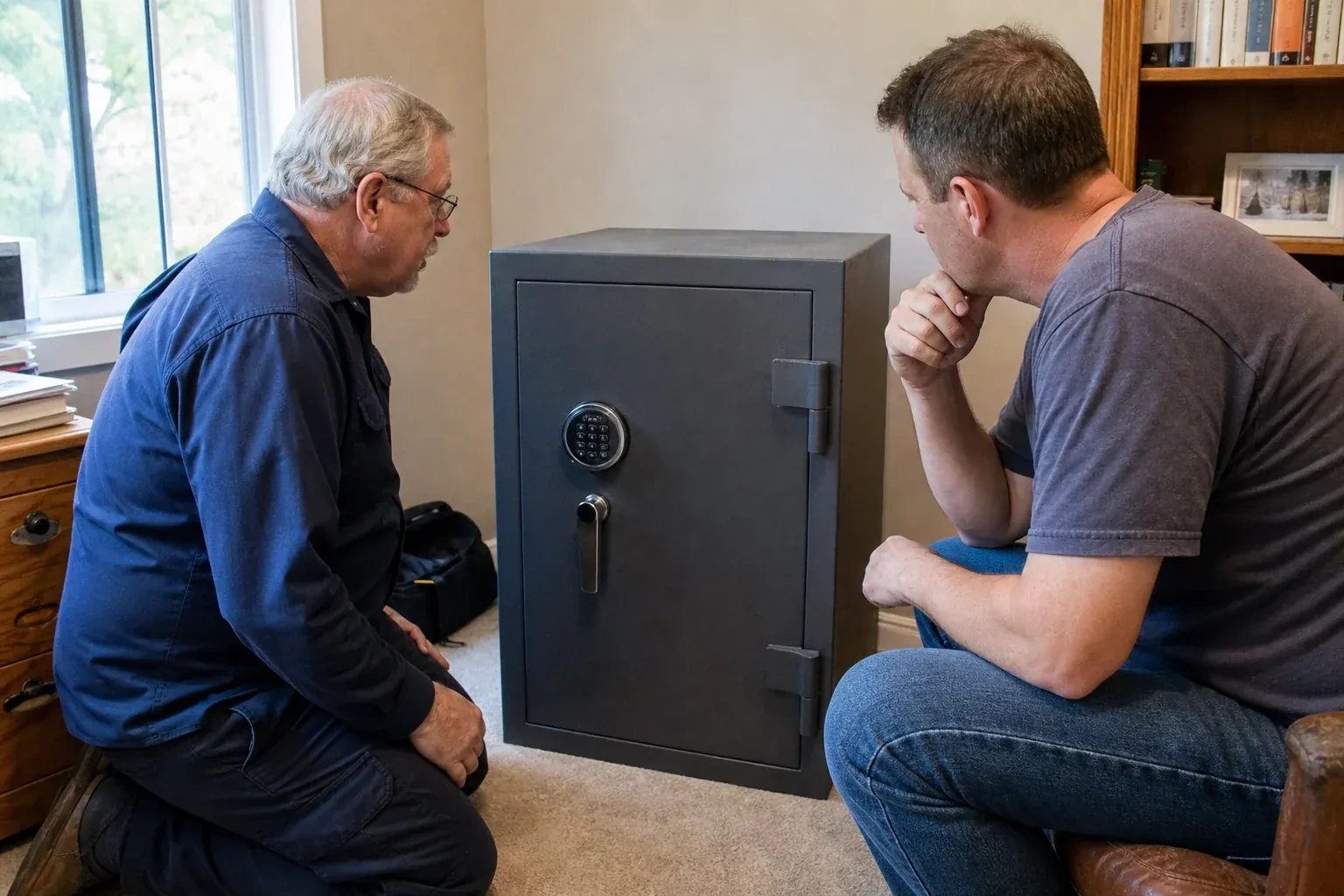
A safe built to protect firearms is opened with the same care as any other, but the aftermath gets one extra look: once the door is open, the storage arrangement inside is checked against what the applicable federal rules for secure firearms storage expect, since a business handling those items answers to those rules whether or not the lock itself needed attention. The combination is then reset the same way it would be for any commercial safe.
Sound familiar?Lawrence Manor
Safe Opening & Combination Change · Lawrence Manor
Scene 1
Every safe carries clues about what is inside its lock. A manufacturer's data plate, usually on the door or inside the frame, often names the brand, model and sometimes the lock's own security rating. The dial style, the keypad's shape and buttons, and whether a key cylinder sits alongside the combination lock all narrow down the lock family before a single tool is used. Older safes without a legible plate are identified from the case shape, the handle style and the dial ring instead. Getting this identification right decides which manipulation technique, which reset procedure or which manufacturer tool applies, and it is the difference between a clean opening and a guess.
Scene 2
When the combination or code is correct but the door still will not move, the problem sits in the bolt work rather than the lock. The locksmith traces the linkage between the lock and the bolts, looking for a tripped relocker, corrosion, or a bent part from an earlier impact, and works to free or bypass the specific point that is jammed. This sometimes means accessing the mechanism from the back or side of the safe rather than through the lock face at all. Once the bolts move freely again, the lock itself is tested separately to confirm it was never the actual fault.
Scene 3
Most safes that needed a reset today will need one again eventually, whether from a future staff change, a forgotten code, or simple wear on an aging lock. Deciding now who is responsible for passing the combination along when roles change, keeping a written record somewhere secure, and having the safe's model and service history noted somewhere accessible all make the next visit shorter and simpler than this one. None of this is required before the locksmith leaves, but a few minutes spent on it now is the difference between a short reset next time and starting from an unknown safe all over again.
What shapes the quoteLawrence Heights Locksmith Services
FeesSame any hour
In most cases the lock and case are left intact, since manipulation, decoding and manufacturer reset paths all work the mechanism the way the original combination would. Drilling is kept for cases where the gentler routes are unavailable or exhausted, aimed at one small point the manufacturer marks as repairable, and patched before the visit ends; a skilled technician aims to leave the rest of the body, hinges and finish unaffected, though the outcome and any effect on the safe's rated protection level depends on its construction.
The safe's brand and model if you know them, whether the lock is a dial, a keypad or a key, roughly how old the safe is, and how the combination was lost or forgotten. Mention whether the safe holds anything with its own handling needs, such as firearms or business records, and how many people should have the new code afterward.
It depends on who still knows the old one. If a bookkeeper, manager or previous owner who had the combination is no longer with the business, resetting it closes that gap even though nothing about the lock itself has failed. A safe that only the current staff have ever known the code to generally does not need changing on that basis alone.
TorontoOntario
Safe Opening & Combination Change · Toronto, Armour Heights, Lawrence Heights, Wilson Heights, Winston Park
Every square is one home in a hundred.
On-site assessment
The pharmacy's drop safe has a keypad that finally lost power for good, and the little override key that was supposed to live behind the counter cannot be found anywhere.
(289) 236-8131, open 24/7.
On-site assessment preferred · (289) 236-8131, open 24/7